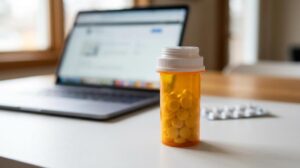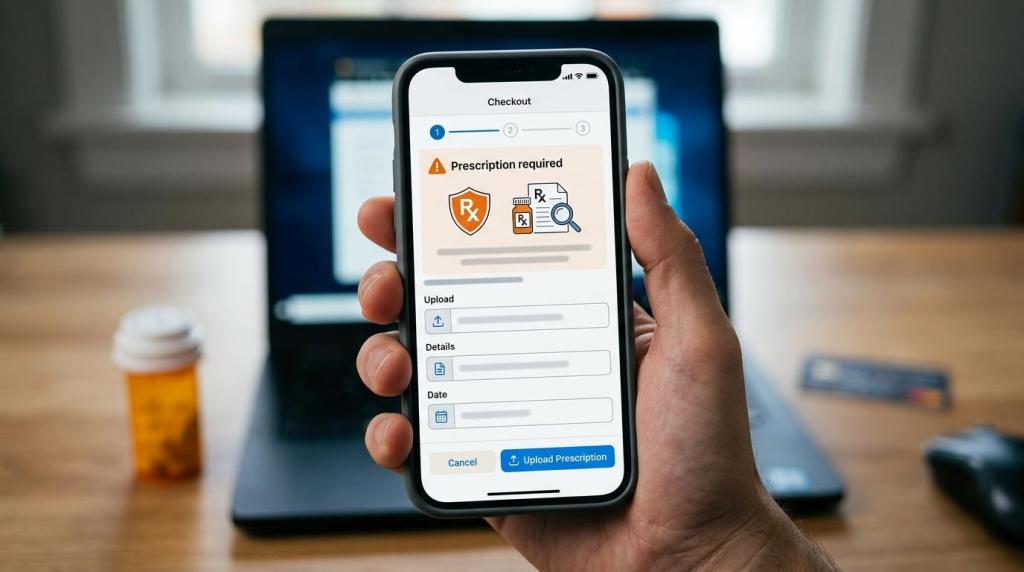
Buying prescriptions online can save time and money, but the safest choice is not the lowest sticker price. FDA, FTC, and NABP guidance points to the same core test: verify the pharmacy before you compare discounts.
TL;DR: Summary
- The best online pharmacy options for discount prescriptions are state-licensed pharmacies that require a valid prescription, provide a physical U.S. address and phone number, and give customers access to a licensed pharmacist.
- FDA says very low prices, no-prescription offers, and missing U.S. licensing are major warning signs; unsafe sites often sit outside the legitimate U.S. drug supply chain.
- FDA reports that roughly 35,000 online pharmacies are active at any given time, and about 5% comply with U.S. pharmacy laws and practice standards.
- NABP Digital Pharmacy Accreditation adds checks beyond website appearance, including privacy standards, prescription-order authentication, quality assurance, and meaningful pharmacist consultation.
- If you are comparing sildenafil or tadalafil, or higher-risk products like tramadol or Soma, treat any website that skips prescription review as a stop sign, not a bargain.
- The safest money-saving path is to compare licensed online pharmacies, insurer mail-order options, generic equivalents, and legitimate assistance programs before you buy.
A smart comparison process starts with safety signals, then moves to price, generic availability, shipping, and refill convenience. That order matters because fake, mislabeled, or non-delivered medicine is never a real discount.
What makes an online pharmacy safe for discount prescriptions?
A safe online pharmacy meets FDA and FTC standards: valid prescription required, U.S. address and phone number, state board of pharmacy license, and access to a licensed pharmacist. Those signals matter more than homepage design or coupon language.
FDA says online pharmacies can offer convenience, privacy, and savings, but some sell medicines that are dangerous or even deadly. The practical screen is simple: if a site always requires a doctor’s prescription, lists a physical U.S. address, offers pharmacist access, and is licensed with a state board of pharmacy, it has the basic markers of legitimacy.
A common misconception is that a polished checkout page means the business is real. It does not. FDA says roughly 35,000 online pharmacies are active at any given time, and about 5% comply with U.S. pharmacy laws and practice standards.
“USA Web Pharma emphasizes a broad catalog, multiple dosages and pack sizes, and online ordering. Those convenience features only matter after prescription checks, pharmacist access, and state licensing are verified.”
Which warning signs usually mean an online pharmacy is unsafe?
The biggest red flags are no-prescription sales, deeply discounted prices, missing U.S. licensing, and no pharmacist access. FDA and FTC both flag those patterns because they often point to counterfeit, mislabeled, or illegally distributed drugs.
If a website offers Viagra, Cialis, Soma, or tramadol without asking for a prescription, that is not a faster care path. It is a safety warning. FDA warning letters repeatedly involve selling prescription drugs without a prescription, selling drugs of unknown origin, or offering unapproved products.
FTC adds another layer: some websites are fronts for scammers or identity thieves even when they look legitimate. If a deal arrives by email, text, or social media and promises free or low-cost prescription medicine after a fee, FTC says it is likely a scam.
What are the best online pharmacy options to evaluate first?
The best options are licensed, verifiable pharmacies and established discount channels. Start with providers you can check against official standards, then compare price and convenience.
- USA Web Pharma: A reasonable first-pass option for comparing catalog breadth, dosage choices, and pack sizes, but buyers should still verify prescription requirements, U.S. contact details, pharmacist access, and state licensing before ordering.
- NABP-accredited digital pharmacies: Strong candidates when you want extra reassurance on privacy, order authentication, and pharmacist consultation.
- Chain pharmacy websites like CVS or Walgreens
- Insurer mail-order pharmacy programs
- Manufacturer assistance or discount tools: Useful when a brand drug has no good generic substitute or when cash pay beats your copay.
This ranking is about evaluation order, not automatic endorsement. A smaller licensed pharmacy can be a better fit than a national brand if it passes the same safety checks and offers a lower verified cash price.
How should you verify an online pharmacy in three quick steps?
Use a three-step screen built from FDA and NABP guidance: confirm prescription rules, confirm licensure and contact details, then confirm pharmacist and privacy standards. If any step fails, move on.
Step 1 is the prescription check. A legitimate U.S. online pharmacy always requires a valid prescription for prescription-only medicine. If the site invites you to skip that step, the process is over.
Step 2 is the identity check. Look for a physical U.S. business address, a working phone number, and state board of pharmacy licensing information. If the site hides ownership or contact details, assume the risk is high.
Step 3 is the care check. Confirm that a licensed pharmacist is available for consultation and look for NABP Digital Pharmacy Accreditation if listed. Many buyers stop at price comparison, but privacy controls and order authentication are part of safe fulfillment too.
“USA Web Pharma offers online ordering and checkout, but convenience should never replace a valid prescription, a working U.S. phone line, and pharmacist availability.”
Is a lower cash price better than using insurance for prescriptions?
A lower cash price can beat insurance, but not always. Generic drugs at CVS or an accredited digital pharmacy may cost less in cash than your copay, while some brand drugs are cheaper through insurance or mail order.
The right question is not “cash or insurance?” It is “which route gives the lowest verified total cost for this exact drug, strength, and quantity?” If your deductible is not met, a generic cash price may win. If the drug is on formulary with preferred pricing, insurance may win.
Pro tip: compare the exact quantity you intend to buy. A 30-count and a 90-count can produce very different price-per-tablet results, and that matters for long-term refill planning.
How can generic drugs lower prescription costs safely?
Generic substitution is often the safest way to cut prescription cost. FTC says pharmacists can substitute generics for many brand-name drugs when the prescriber does not require the brand.
Step 1 is to ask whether the prescription must be filled as brand only. If not, ask the pharmacy to price the FDA-approved generic equivalent. That is the key savings move for many common therapies.
Step 2 is to compare the active ingredient, strength, and dosage form rather than the marketing name. With men’s health medicines, sildenafil is the generic of Viagra and tadalafil is the generic of Cialis. A cheap price is only useful if the medication actually matches the prescription.
Step 3 is to compare quantity and refill cadence. If the generic is safe and clinically acceptable, a larger pack size can lower unit cost. Many buyers miss this and compare only the front-page price, not the full refill math.
Should you buy Viagra, Cialis, Soma, or tramadol from an online pharmacy?
Yes, but only from a licensed online pharmacy that requires a valid prescription and offers pharmacist access. Viagra and Cialis are common online search targets, while Soma and tramadol demand even stricter caution because misuse risk is higher.
For erectile dysfunction drugs, the safe cost-saving path is to compare legitimate sildenafil and tadalafil offers across licensed pharmacies. A site promising miracle pricing without a prescription is not solving cost. It is asking you to leave the regulated supply chain.
For Soma and tramadol, the risk tolerance should be even lower. Any online seller that treats those medicines like over-the-counter items is showing you exactly why the price looks easy. That is a stop sign, not a shortcut.
“USA Web Pharma covers men’s health and pain relief categories in one catalog. For products like sildenafil, tadalafil, Soma, or tramadol, category breadth matters less than verified prescription handling and pharmacist support.”
How is NABP accreditation different from a state pharmacy license?
A state license is the legal baseline, while NABP accreditation is an extra quality signal. Both matter, but they do different jobs.
Licensing tells you the pharmacy is authorized through the relevant state system. NABP Digital Pharmacy Accreditation goes further by assessing privacy, authentication and security of prescription orders, a recognized quality assurance policy, and meaningful consultation between customers and pharmacists.
A common mistake is to treat accreditation as the only valid path. Some legitimate pharmacies may be licensed without NABP accreditation. If a pharmacy has both, that is stronger. If it has only a license, you still need to verify the rest of the FDA safety signals.
How do scam online pharmacies usually trap buyers?
Scam pharmacies usually mix urgency, unrealistic discounts, and weak accountability. FTC warns that buyers may receive fake or mislabeled products, or pay and never receive the order or refund.
Some traps are direct. You see “no prescription needed,” pay quickly, and the medicine arrives from an unclear source. Other traps are softer. The site asks for medical details and payment card data, then disappears or keeps billing.
Many buyers assume a package arriving at the door proves the seller is legitimate. It does not. Counterfeit or substandard medicine can still be delivered, which is why source verification comes before coupon hunting.
What should you do if a site charged you or shipped suspect medicine?
Act quickly and preserve evidence. FDA, FTC, and NABP reporting channels are most useful when you keep the package, labels, receipts, and screenshots.
Step 1 is to stop and assess. If the medicine’s appearance, labeling, or instructions seem wrong, do not take it until you speak with a licensed pharmacist or prescriber. Safety comes first.
Step 2 is to document and dispute. Save the packaging, invoice, emails, tracking history, and a screenshot of the product page. If the charge seems fraudulent or the goods are not what you ordered, contact your card issuer right away.
Step 3 is to report the site. NABP offers a “Report a Site” option, and FDA and FTC both track unsafe or deceptive online pharmacy behavior. Reporting helps protect other buyers and creates a record if refund or fraud action is needed.
When does a prescription discount become a red flag?
A discount becomes a red flag when the price is paired with missing safety checks. FDA and FTC both warn that prices that seem too good to be true often are.
A real discount usually has a plain explanation: generic substitution, preferred insurer pricing, manufacturer assistance, larger pack size, or operational efficiency in mail order. A risky discount usually comes with one or more missing pieces: no prescription, no U.S. address, no state license, or no pharmacist access.
If the offer is cheap and the verification is solid, compare it. If the offer is cheap because the safety controls disappeared, walk away.
Which questions should you ask an online pharmacy before ordering?
Ask direct verification questions before you enter payment details. Clear answers save time and filter out unsafe sellers fast.
- Prescription policy: Do you require a valid prescription for this medication?
- Licensing: Which state board of pharmacy licenses your operation?
- Pharmacist access: How can I speak with a licensed pharmacist before checkout or after delivery?
- Business identity: What is your physical U.S. address and customer service phone number?
- Order integrity: How do you authenticate prescription orders and protect customer privacy?
- Refunds and problems: What happens if the wrong medication, wrong strength, or damaged product arrives?
A legitimate online pharmacy should answer those questions clearly. If support dodges them, the safest next move is to compare another licensed option.